Showing posts with label Book Reviews. Show all posts

Thursday, March 15, 2012

Cooking Vanessa's Beans at Frankie's Place


Reading Frankie's Place: A Love Story, by Jim Sterba (NY: Grove Press, 2003) makes you feel like you are visiting friends at their summer camp on Maine's Mount Desert island. Sterba's book is an atmospheric account of his courtship of, marriage to and many felicitous summers spent with fellow author Frances "Frankie" FitzGerald.  Sterba is a former NY Times and Wall Street Journal foreign correspondent and FitzGerald is a Pulitzer Prize winning nonfiction writer, both of whom found love later in their busy, globe-hopping lives.


The book revolves around the slower pace of summers spent at Frankie's place, a family-and mosquito-shared cabin in the woods near the shore. It might be summer, but there is still a schedule to adhere to: Frankie is an advocate of morning dips in Maine's icy waters, calisthenics and excessively long hikes, which Sterba loving refers to as FitzGerald Survival School. There is also much writing to be done (Frankie likes a manual typewriter for that task), reading, sailing, mushroom hunting, mussel gathering and other foraging/shopping for provisions.

There's also an amusing chapter about the author's search for WASPs (White Anglo-Saxon Protestants) on this island historically populated with many of these folks. He researches the subject at the library, at a private swimming club, and in other prowlings around the village of Northeast Harbor. They elude him, particularly the wily subspecies, the High WASP, until a chat with a friend clues him in to the fact that he married one. Oh.

Punctuating all the prose is Sterba's recipes - offered in somewhat slapdash prose style, with plenty of room for variations according to what the pair might have rustled up from the ocean, container garden or woods. I have festooned my copy of the book with lots of bookmarks to hold my place for various recipes, but one dish called out to me immediately. Sterba describes a warm bean salad that he first tried at a friend's wedding. He pestered the caterer like a good newspaperman until she gave up her secrets and so I offer to you my own adapted version that made us all very full and happy at Chez Crispy Cook.

Vanessa's Beans (or Frankie's n' Beans)
 -adapted from a recipe in Jim Sterba's Frankie's Place: A Love Story

1 (l lb.) bag dried small white navy beans (I used red kidney beans)

2 Tbsp. olive oil
1 quartered onion
3 cloves peeled garlic
2 bay leaves

Other aromatics of your choice (I threw in celery trimmings, carrot peels, onion skins, and parsley stems from my soup stock stash in the freezer). Sterba recommends sliced ginger, bacon, rosemary and thyme branches)
2 cups vegetable broth

2 Tbsp. red wine vinegar
Juice of 1/2 lemon
1/4 cup olive oil
1 cup chopped fresh herbs (I used parsley and chives)

1 cup chopped red and yellow bell peppers (I used the trimmings from chopping up pepper squares to grill on skewers during our first spring barbeque)

Salt and pepper to taste

The night before, cover beans with cold water and let sit out at room temperature to soak overnight. Change water 2-3 times.

The next day, drain beans and place in a large, heavy soup pot with 2 Tbsp. olive oil, onion, garlic, bay leaves and vegetable broth. I added in the soup trimmings as noted above to further enrich my bean broth. Bring to a boil and then simmer along merrily until beans are to desired softness (about 1-1/2 hours).

Drain off and reserve bean broth. Let beans cool a bit, and then fish out all the large bits of veggie detritus (onion skins, celery stubs, parsley stems, bay leaves, carrot peels, herb branches). The garlic should have become quite soft so you can just "moosh" that in, to use a favorite Sterba cooking term.

Mix up a vinaigrette with 1/4 cup olive oil, lemon juice, fresh herbs, and peppers. Add in some of the reserved bean broth (about 1/2 cup). Let stand for 20 minutes, stirring occasionally. Gently dress the beans and season with salt and pepper to taste.

Serve warm or at room temperature.


Vanessa's Beans are some good frugal eating and I even have leftover bean broth to use in other recipes (I'm thinking about some pasta fazool later on). I have sampled and made many other bean salads, but I think the key here is that the beans are warm and infused with so many aromatic flavorings in their cooking liquid that they really melt in your mouth. 

One serving of this lovely dish is being sent over to my friend Simona at Briciole for her semi-annual Novel Food event, where you will find lots of other interesting posts about various books and the recipes inspired by them after her March 18 deadline. 

A second serving of Vanessa's Beans is being sent to another blogger compadre, Heather of Girlichef, who is guest hosting My Legume Love Affair #45. This monthly blog event celebrates legumes in all their glory and is the brainchild of Susan the Well Seasoned Cook.

Friday, January 20, 2012

In Which I Become an Outlaw Cook with John Thorne

Running a used bookstore for the last fifteen years has educated me about which books are treasured, or perhaps guarded is a better word, by their owners and hardly ever relinquished back into the market. I rarely get any books in the shop about blacksmithing, stained glass or rare coins; such classics as To Kill a Mockingbird, Catch-22, The Cat in the Hat and Gone with the Wind don't show up to be traded; and works by a select group of authors and illustrators like Shirley Jackson, W.H. Auden, Edward Gorey, Kurt Vonnegut, Tasha Tudor and Philip K. Dick are seldom brought to our doors.

Add food writer John Thorne's books to this elite list. I was first made aware of his work many years ago by my bibliophilic friend Myra, who asked me to keep an eye out for Thorne's books. After at least a decade, I had yet to find any such titles in my shop or out book hunting, until one day when I was on a holiday in Great Barrington, Massachusetts at Yellow House Books, and spied a copy of  Outlaw Cook (NY: Farrar, Straus, Giroux: 1992), a collection of food essays written with his wife Matt Lewis Thorne. I snapped it up and devoured it with great pleasure over the next several weeks and am waiting to savor another of his books, Mouth Wide Open, which is at the top of my bedside room reading pile.

Now I know why Thorne's books never show up in the shop. They are to be savored and reread, bookmarked and propped open on the kitchen counter, and reread again. I chose Outlaw Cook for the current round of Cook the Books, the online foodie book club started by me, and two lovely blogger friends: Deb of Kahakai Kitchen in Hawaii and Johanna of Food Junkie, Not Junk Food in Greece.  For this bimonthly blog event, participants are asked to read our chosen book, blog about it and cook something up that is inspired by our reading. Anyone can join the "regulars" in this book club by posting and then leaving a comment at the Cook the Books site. The deadline for this round is January 23, 2012, and I am delighted that our featured author, John Thorne, will be reviewing the submitted posts and picking a winner to receive the coveted CTB winner's badge.


Thorne's prose is an interesting mixture of the erudite and the commonplace. One will learn much about a lot of different subjects, and need to look up many things along the way, but the writing is simple and direct and full of great quotes and turns of phrase. There are many intriguing essays in the book which explore different dishes and cultural traditions, some autobiographical asides, reviews of cookbooks and examinations of food personalities. Outlaw Cook devotes many pages to bread baking and outdoor hearths and there's a gloriously evocative chapter on Russians' love affair with mushrooms.

I really like Thorne's approach to trying out a new recipe or ingredient. Once something strikes his fancy, he's on an adventure to study it and make it his own. He reads about it extensively, cooks up many variations and then presents the reader with his findings. Whether it's hunting for the perfect meatball, simple pasta dishes, black beans and rice, pea soup or the best thing to do with a bounty of summer raspberries, there's lots of research and development in the Thorne kitchen and library and plenty of references offered up for further exploration.


As an avid member of the Order of the Stinking Rose, I was particularly entranced by the essay on garlic soup. I've made creamy, decadently rich garlic soups and delicate garlic and rice soups, and thought that covered much of the culinary territory on that subject. Not so fast, says Thorne, with his musings on various Mediterranean permutations of garlicky broths. There's the paprika and saffron-laced Sopa de Ajo of Spain, France's Soupe a l'Ail Bonne Femme studded with potato and tomato, herb-redolent Aigo Bouido from Provence and even a cold Garlic and Walnut Soup with Fresh Goat Cheese.  Most of these soups require a crusty piece of toasted bread sunk at the bottom of the soup bowl, and since my gluten-free breadbaking production neither produces quantity nor quality (witness the hockey puck "fluffy bun"example in the photo below), I turned to my trusty recipe card file for a breadless garlic soup recipe instead.

 
My garlic soup recipe is of origin unknown, most likely copied out of a cookbook borrowed from the public library during my foodie youth, but I tinkered with it enough to confidently call it my own adaptation. It's a very herb-redolent broth, perfect for bolstering the winter-ravaged immune system  and imparting a warm glow after a day battling the wind and cold. Just be sure to share it with those around you, since "...garlic is the ravisher, dominating those who would eat it, and then crowing that subjugation to the world through the body's every pore." (p. 120)


Herb and Garlic Soup

1 head garlic, separated into cloves
2 quarts water
2 tsp. salt

2 whole cloves
1/4 tsp. dried sage, crumbled
1/2 tsp. dried thyme, crumbled
1 bay leaf
2 Tbsp. parsley, chopped coarsely

2 egg yolks
3 Tbsp. olive oil

Grated Parmesan

Bring water and salt to a boil and drop in garlic cloves. Boil 1 minute, then fish out garlic and peel. Cut off root tip and cut into chunks. Throw it back into the simmering pot with the herbs and spices.

Bring to a boil again and then lower heat and simmer 30 minutes. Strain soup to remove herbs and then pour broth back into pot. Finely mash the cooked garlic and put back into the soup pot. Bring to a low simmer.

Beat egg yolks with olive oil and add to the soup pot. Gently simmer for 2-3 minutes to let simmer and thicken. Add salt and pepper to taste and serve hot with a sprinkling of cheese on top.

Makes 4-6 servings.


I'll have a roundup of all the Cook the Books posts about Outlaw Cook after the January 23 deadline, so be sure to stop back to see all the submissions. Next up for our book club is Roald Dahl's childhood classic, Charlie and the Chocolate Factory, which will be hosted by Deb during February/March. Happy reading and eating!


Monday, November 28, 2011

Time to Cook the Books a la Grecque

The latest book pick for Cook the Books, the Internet foodie book club that my friends Johanna of Food Junkie, Not Junk Food and Deb of Kahakai Kitchen started three years ago, is Patricia Volonakis Davis'  Harlot's Sauce: A Memoir of Food, Family, Love, Loss, and Greece (NY: Harper Davis Publishers 2008).  With Cook the Books, we have read many kinds of foodie non-fiction, novels, children's literature and biographies, and traveled the world reading about different culinary traditions, but we have never examined the wonderful food culture of Greece, so I was excited when Johanna picked this book for our current CTB selection.

Davis tells the story of her courtship and marriage to a Greek immigrant and the cultural clashes between her first generation Italian-American family and his. Eventually, she and Gregori and their son Nick move to Greece and her descriptions of her new life there were the most interesting part of the book for me. I enjoyed the translations of various Greek words and expressions ("She can make a donkey die!" means someone is stubborn beyond words) and loved her prose about about Greek Orthodox rituals, the complex dance of the biscotti and coffee at Greek funerals, and comparisons of American and Greek attitudes towards children, stray dogs, and education.


Though the word "Food" is given preeminence in the title of this book, there is not so much discussion of Greek cuisine as there are descriptions of how Davis' marriage weakens and ultimately unravels. And this is not what I thought the book would be about, so unfortunately, I would find my thoughts drifting away through yet another recitation of a marital argument or fight with a passive-aggressive in-law. I flipped ahead through many pages seeking out the nuggets about Greek culture seen through an American's eyes or about the love-hate relationship that first generation immigrant families have with US pop culture and societal freedoms.

My favorite character in the book is Patricia's mother, a chain-smoking philosopher, whom she unfortunately becomes estranged from after too many Gregori incidents.  I absolutely loved Mama Nancy's theory of comparative religion. When young Patricia came home from Catholic school one day and asked how one knows that their religion is "the right one", Mom replies:

 "All religions are the "right" religion, if they're right for the person following them. They all teach basically the same things: to love one another, be the best people we can be, to never deliberately harm someone else."

When her daughter asks why there are different religions, Mom's educational metaphor comes back: "The best way I can describe it is that it's like decorating a house. Some have furniture that might seem strange to you, but the people who live there are happy with it." (p. 81)


After my reading, I was inspired to filch a Greek cookbook from our bookstore shelves, Perfect Greek (London: Parragon, 2006) and perused many a delicious recipe for various mezze, sweets and salads, but ultimately I settled on a recipe for a tomatoey Greek Fisherman's Soup which I adapted to be much more stew-like and which made for a wonderfully fragrant meal served over rice. I'm glad I made a big pot of rice, because this concoction had terrific juices and we sopped up every bit at dinner.


Here's a Fish Stew fit for a Harlot or Fisherman or whomever shows up at your table:


Greek Fisherman's Stew (adapted from Perfect Greek)

2 frozen fillets of tilapia, thawed and cut into chunks (they will flake off in the cooking)
1 lb. frozen shrimp, thawed and shelled

1 onion, peeled and thinly sliced
4 stalks celery, thinly sliced
3 cloves garlic, peeled and sliced

3 Tbsp. olive oil
1/2 cup dry white wine
1 (14 oz.) can diced tomatoes and their juice
Peel of one orange
1 tsp. chopped fresh thyme
3 Tbsp. chopped Italian parsley
2 bay leaves
Salt and pepper to taste
Hot cooked rice

Heat olive oil in large soup pot. Add onion, celery and garlic and cook, stirring often, until softened, about five minutes. Add fish and shrimp and cook, stirring often, another 5-7 minutes, until shrimp are pink

Add white wine and tomatoes and bring to a boil. Add orange peel (I used a tangerine and squeezed in the juice too), thyme, parsley and bay leaves. Cook another 15 minutes at a simmer until seafood is thoroughly cooked and the fish has flaked up and into your wonderful stew juices.  Season with salt and pepper and serve over hot cooked rice. The citrus in the sauce really picks up the sweetness of the fish and shrimp.

Makes 4 dinner servings.

Johanna, our resident Athenian Cook the Book hostess, will be posting a roundup of all the blog entries about Harlot's Sauce after tomorrow's deadline, so hop on over to Cook the Books later this week to see all the posts. Our featured author, Patricia Volonakis Davis, will also be serving as our guest judge to select a winner from the blog entries so that should be entertaining reading as well.

**Next up on the Cook the Books reading list is John and Matt Lewis Thorne's collection of food essays "Outlaw Cook".  It's a fantastic book and I invite you all to join us in reading the book and then blogging up your thoughts and any Outlaw-inspired recipes.

Wednesday, May 4, 2011

Strawberry Cupcakes and a Review of the new Gluten-Free Cupcakes cookbook by Elana Amsterdam

Who can resist a cupcake? They are so darn cute and make delightful little hand held treats. Cupcakes are so prevalent these days throughout the foodie world and Colorado blogger Elana Amsterdam has presented the gluten-free community with a lovely Spring gift with her new cookbook "Gluten-Free Cupcakes: 50 Irresistible Recipes Made with Almond and Coconut Flour" (Berkeley, CA: Celestial Arts, 2011).

The publisher sent me a review copy of this book and it had already been perused by my youngest before I got home from the bookshop. She requested that we go out the next day and get the ingredients for the Strawberry Cupcakes (p. 24 of the book, and there's also a recipe posted on Elana's Pantry here)

We picked up the ingredients and also decided to top these delicate cupcakes with Elana's Strawberry Meringue Frosting (p. 97).


These cupcakes were delectable and even better the next day after the chopped strawberries mixed into the cupcake batter had moistened up the cakes with their juices. Coconut flour provides the base for the cake mixture and has a nice fiber and nutrition boost as well. All of the recipes in Elana's book are chock full of healthy ingredients, so one can feel good about cooking up these sweet treats and serving them to your family. The author does a great job of describing the various ingredients that she uses in a beginning chapter that is really useful. Cooks that are unfamiliar with what they are, where to buy them and how they perform in the baking process (cooks like me!) will refer back to this section many times over.

The Strawberry Meringue Frosting got less favorable reviews. It certainly performed well and made some wonderful curlicues that held their shape well on top of my cupcakes, but half the Crispy Crew complained that the frosting taste and texture was not to their liking (it's a meringue made of whipped egg whites, boiled down agave syrup and chopped strawberries), so I would top these pink beauties with a cream cheese or buttercream frosting next time. And there will be a next time soon. ; )


I am glad that my kid picked the Strawberry Cupcake recipe, because not only was it scrumptious, but it was one of the recipes that didn't call for almond flour. The only almond flour I have found in my area for sale is at a local health food store for $13 for a one-pound bag, and that's just too expensive for me. I see that one can halve this price online, but I wasn't ready to plunk down double digits for a bag of flour.

The book contains a great selection of other interesting flavor combinations to try out (Pecan Pie Cupcakes, Pina Colada Cupcakes, White Chocolate Cherry Cupcakes) as well as some gluten-free recreations of some nostalgic delights, like the Cream-Filled Chocolate Cupcakes which are dead ringers for the Hostess chocolate cupcakes. There are also a few toothsome savory muffin recipes at the back of the book. Kudos also to Annabelle Breakey for the great color cupcake photographs throughout the book that make all of these recipes seem so irresistible.

I enjoyed perusing and test driving this sweet treat of a cookbook and recommend it to other home bakers.

Here are some other favorable reviews of Elana's new cookbook by fellow bloggers:

Gluten-Free at Mother Earth News


Book of Yum

Gluten-Free Easily

Gluten-Free Diva

***As an aside, this book review also gave me the perfect chance to make my own cupcake stand made from vintage plates and candlesticks. I certainly have more than a few orphaned pieces of china in my shelves and will now be keeping an eye out at garage sales and thrift shops for more perfect cupcake stand components.

With inspiration from my Greek blogger buddy Johanna, of Food Junkie, Not Junk Food, I whipped this up craft project up in a few short minutes on one of the few breaks in the Spring precipitation we've been enjoying this past month.  I used a clear all-purpose epoxy to join my pieces together and want to remind those of you who may want to try this cupcake stand project out yourselves to make sure to do so outside or in a very well-ventilated area. Solvent fumes are very hazardous to your health and I want you around to let me know how your cupcakes and cupcake stands turn out!

Monday, August 30, 2010

Pomodoro!, Pulcinella and the Glory of Summer Tomatoes

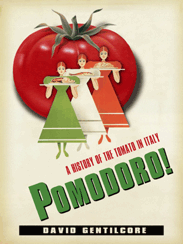
As noted previously here on The Crispy Cook, some blogger buddies and I were offered the chance to review copies of the new book "Pomodoro! A History of the Tomato in Italy", by David Gentilcore (NY: Columbia University Press, 2010) and we decided to put together a little blog event to roundup our thoughts about the book and to celebrate the tomatoes we all crave every season. If you would like to join us, please feel free to blog up something (including a recipe for a dish featuring tomatoes) and leave a comment below by our deadline of September 13, 2010 and I'll include you in the roundup.


Reading Professor Gentilcore's lively prose was a treat. I have enjoyed absorbing details of history through other food-centric volumes (Mark Kurlansky's "Cod" and Salt" are particularly good reads) and Pomodoro! was an entertaining romp through many centuries of Italian history. The tomato is not native to Europe, but was imported from the New World in the mid-16th century as a botanical curiosity for aristocratic gardeners. It was considered a plant that would dampen one's bodily humors and was not incorporated into everyday Italian cooking until the 1800s, when peasant women began sun drying tomatoes and tomato paste to supplement their farm incomes.

The struggles among Italy's various principalities and regions leading up to unification of Italy in the 1860s saw a general shift in prosperity from South to North. The proud Kingdom of Naples was reduced to a provincial capital and Neapolitans were mocked as bumbling, pasta-munchers in nationalist newspapers. Being poorer meant that Southern Italians ate less meat and more vegetables, and tomatoes soon zoomed to the top of the food pyramid.

Gentilcore's book has other interesting chapters about how the development of tomato varieties swung back and forth between Italy and the U.S. and how the waves of Italian immigration to America developed new tastes back home for tomato-heavy recipes. The chapter "The Autarchical Tomato", about how Mussolini's government used the tomato and home cooking iconography in its Fascist propaganda is similarly eye-opening, and overall the book is a great combination of scholarly detail and engaging writing that chronicles how the tomato slowly became an integral part of Italian culture.


Having some Neapolitan ancestors, the short description in the book about the commedia dell'arte stock character of Pulcinella, who represents Naples with his ever-present pot of macaroni, intrigued me to learn more. Commedia dell'arte is a stylized form of comic street theater which features masked actors and which flourished in Europe during the 16th and 17th centuries. Many characters originally developed to represent different regions, and Pulcinella, with his long-nosed black mask, oversized floppy clothes and sugarloaf hat, became a Neapolitan trickster type, who, when he wasn't loafing around gorging on macaroni, carried a cudgel to beat people with. If you've even seen a Punch and Judy show you'll see how Pulcinella evolved into the long-nosed evil assaulter, Punch, in English puppetry traditions. There is a Pulcinella Museum in Acerra, which would definitely be high on my itinerary if I get to visit Italy someday. In the meantime, I sketched a merrier version of the pasta-loving Pucinella to be my tomato muse in the kitchen.


And now to turn to the glories of the pomodoros, or golden apples, the tomatoes of summer! Ah, the beauty of a bowl of fresh garden tomatoes. It is the season when our family indulges in simple tomato sandwiches, tomato and cucumber salads, tomatoes tucked into pretty much every supper dish and our kitchen counters are filled with colanders and bowls of tomatoes awaiting canning and freezing.

I always grow at least 10-12 plum tomato plants in our home garden. They are meaty and fabulous for preserving, either as sauce or slow-roasted in the oven with salt, pepper and olive oil and then packed into freezer packs with fresh basil leaves. The other tomato varieties we like for immediate eating include whatever red and yellow varieties are offered as seedlings from the farmer around the corner and this year that included Striped German, a yellow and red heirloom variety with heavy fruit and some Supersteak and Celebrity tomatoes. And of course tomatoes need basil and garlic for neighbors, so I think my garden is fairly Italianate these days.

Since I already had put up some canned tomato sauce and spicy salsa this summer I thought I would attempt canning some tomato barbecue sauce. In honor of my saucy, spicy new friend Pulcinella, who also endears himself to me with his high-pitched voice and tendency to hop around like a chicken (pulcinella means little chick in Italian), I present this sweet and tangy tomato barbecue recipe:


Pulcinella's Barbecue Sauce

-adapted from the 1990 Ball Blue Book

8 quarts tomato puree
(I use my 4 quart crock pot to cook down cored, chunked tomatoes pretty much every night during tomato season. I turn the crock pot off in the morning and when things have cooled, I run the tomatoes through my food mill to get rid of seeds and skin and it makes a wonderful puree)

3 large onions, peeled and rough chopped
2 green bell peppers, seeded and rough chopped
2 red bell peppers, seeded and rough chopped
1 bunch celery, leaves and all, rough chopped
2-3 hot peppers, seeded and rough chopped (wear gloves)

1-1/2 cups brown sugar
5 cloves garlic, finely chopped
2 Tbsp. dry mustard
2 tsp. cayenne pepper
2 tsp. dried red pepper flakes
2 cups cider vinegar

Cover onions, bell peppers, celery and hot peppers with water in a pot. Bring to a boil. Lower heat and cook, covered, until vegetables are softened. Puree through food mill.

Put pureed veggies and tomato puree in large stock pot and bring to a boil. Lower heat to medium and keep at low boil until mixture thickens down to about half.

Stir in remaining ingredients and simmer, stirring occasionally to keep from scorching, until sauce is nice and thick, about 2 hours. Season to taste with salt and add more hot pepper flakes if Pulcinella advises you to.

Pour into sterilized pint jars, leaving 1/4 inch head space. Cap and process in a hot water bath for 20 minutes.

Makes 7 pints.

This is a slightly sweet barbecue sauce that is great for marinating vegetables and slathering on grilled zucchini slabs and portabella mushrooms. Pulcinella advises that it tastes great on roast chicken too.

I hope this post piques your interest in learning more about the history of tomatoes and seeking out Gentilcore's book, "Pomodoro!". You can read an interview with the esteemed author over at The Boston Globe and be sure to check back here after September 13th for the roundup of tomatoey posts.